The Escalation Trap: When Each Beat Gets Bigger
Comic escalation works better when each beat changes kind, not just size. Learn to vary a scene’s pattern so its jokes keep surprising instead of sagging.
Comic escalation does not need every beat to be louder, stranger, or more disastrous than the one before it. In a scene, a pattern stays lively when the audience recognizes what is repeating but cannot predict exactly how the next repetition will behave.
That distinction matters because “bigger” is easy to mistake for “better.” A character can receive one more bill, summon one more official, or suffer one more collapse, and the scene may still feel smaller: the audience has already learned the move. The useful question is not only how much more can happen, but what new kind of pressure can enter the pattern.
Why does bigger escalation stop working?
Scale creates an immediate jolt, but repetition turns that jolt into a forecast. Once viewers understand that each beat adds a larger consequence, they begin waiting for the next increase instead of responding to the scene in front of them.
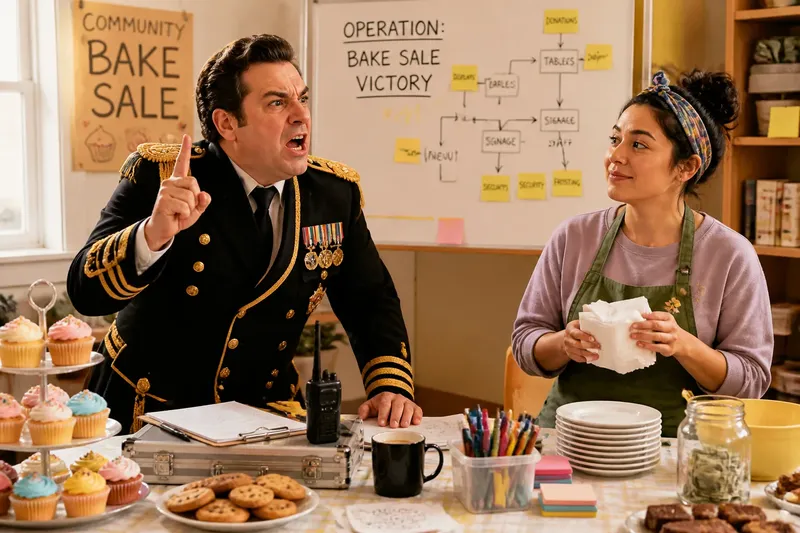
That forecast can flatten a sequence even when the events are outrageous. If a clerk rejects a form, then rejects a larger stack of forms, then rejects a whole filing cabinet, the action is growing physically. But the clerk’s behavior and the scene’s comic logic remain unchanged. The filing cabinet is a bigger prop, not a new idea.
Escalation also has a ceiling. A scene built only on increasing damage eventually needs an implausible catastrophe to keep climbing. The writer then has to spend more effort topping the previous beat than revealing anything fresh about the characters or the situation.
Think of a repeated beat as a doorbell. Ringing it harder does not make every ring more interesting. A different visitor, an unexpected response from inside, or a change in why the bell is being rung can restore the audience’s curiosity.
What does variation in kind mean?
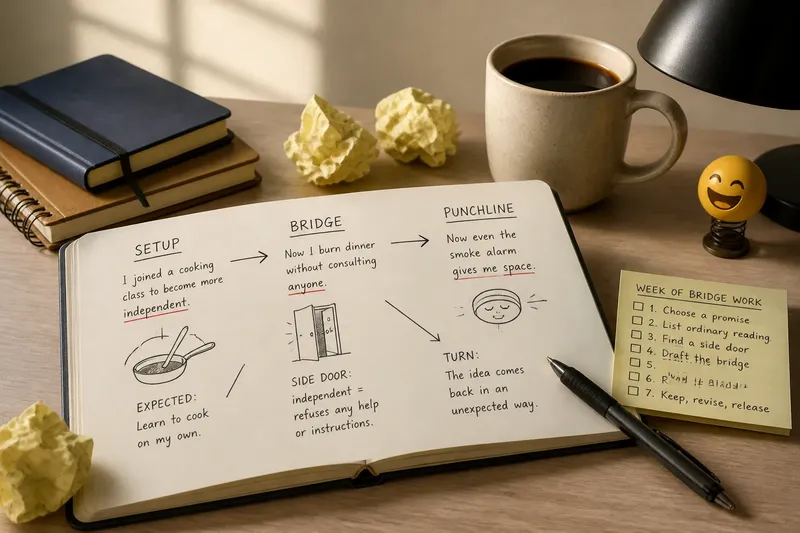
Variation in kind changes the nature of the next beat while keeping a recognizable connection to the pattern. The audience can still see why the moment belongs in the sequence, but its form, motive, or consequence shifts.
A useful pattern might be: a character tries to keep an embarrassing mistake private. The next beat need not expose the mistake to a larger crowd. It could make the character defend it as a deliberate choice, recruit someone to help conceal it, or discover that the supposed cover-up has become more humiliating than the original error. Each beat turns the same pressure in a different direction.
Several kinds of variation can work in scenes:
- Change the tactic: A character moves from denying a problem to bargaining with it, then to proudly claiming it.
- Change who understands: One person may see the absurdity while everyone else treats it as routine, or the person in authority may be the least informed.
- Change the social cost: A small inconvenience becomes a test of loyalty, status, politeness, or reputation without needing a larger physical disaster.
- Change the emotional register: A frantic exchange can turn into studied calm, earnest apology, or misplaced tenderness.
- Change the meaning of the repeated object or phrase: A prop first treated as a solution might later become evidence, a gift, or a symbol of the character’s stubbornness.
These are not interchangeable tricks. Choose a shift that grows from the scene’s central pressure. Random novelty may surprise the audience, but it can also make the sequence feel disconnected.
How can a scene keep a pattern without going slack?
Keep one clear element stable and let another change. The stable element gives viewers a handle: a recurring request, an awkward rule, a character’s goal, or a physical routine. The changing element supplies fresh information.
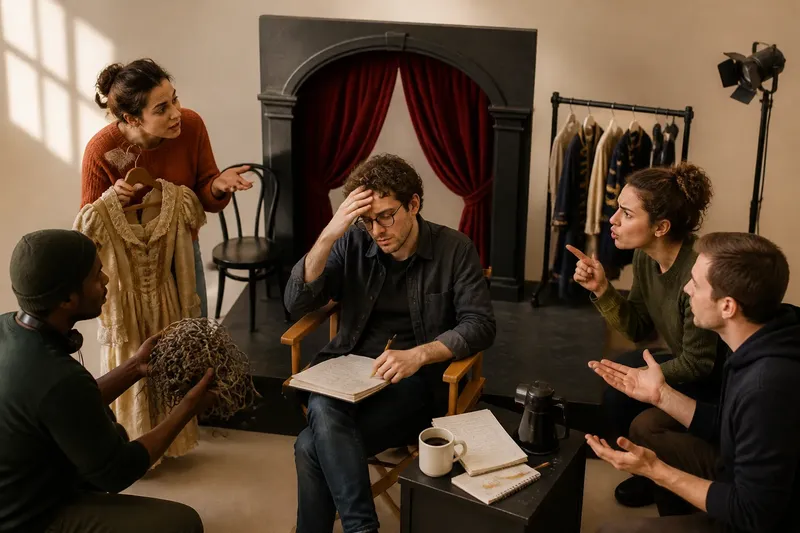
For instance, imagine a fictional scene at a community theater where a director is trying to obtain one quiet minute before rehearsal. The first interruption comes from an actor asking about a costume. The next comes from the stage manager, who silently hands over a tangled prop. Rather than adding a louder interruption, the director receives a solemn request to settle a dispute between two people arguing over who is allowed to whisper. The interruptions still thwart the same goal, but each arrives through a different social relationship and asks the director to respond in a new way.
The example works only if the director’s reactions change too. If every interruption gets the same sigh and the same line, the sequence soon becomes a metronome. A character may try to remain gracious, start issuing rules, then break one of those rules personally. That progression lets the audience track both the pattern and the character’s shifting strategy.
Before writing another beat, ask what the audience now knows. Perhaps they know the character’s excuse, the rule everyone is protecting, or the cost of being polite. The next beat can use that knowledge against the character rather than simply increasing the scale.
How do you decide whether the next beat should be larger?
Make a beat larger when scale changes the meaning, not merely the volume. A consequence can widen the scene’s stakes, expose a hidden relationship, or make a character’s chosen strategy harder to sustain. If the only purpose is to outsize the previous moment, consider changing the type of pressure instead.
Try a quick table read or a pass through the scene aloud. After each beat, note what changes: the objective, the audience’s knowledge, the social arrangement, the character’s tactic, or the emotional tone. If the only entry is “more extreme,” the sequence may be leaning too heavily on one dimension.
This is a diagnostic, not a demand to make every beat different. A recurring move can be funny precisely because it repeats. The question is whether repetition is accumulating meaning. A character who keeps correcting a harmless mispronunciation may become funnier as the correction shifts from helpful to competitive to self-protective. The words may recur, while the reason for saying them changes.
In performance, leave room for the audience to register the new turn. A pause can clarify that the scene has changed direction; it need not be a long wait for laughter. Actors can also distinguish repeated beats through focus and intention rather than simply adding vocal force. A quiet correction delivered as a challenge can alter the pattern more than a shouted correction.
What should you do when a comic sequence feels repetitive?
Identify the repeated engine before adding material. Is the scene repeating a refusal, a misunderstanding, a ritual, an excuse, or an attempt to control the room? Name the engine in plain language, then look for a new consequence or tactic that follows from it.
Cutting can be more useful than topping. Remove a beat that repeats both the action and its effect, and the remaining sequence may feel sharper. Keep the beat that changes the audience’s understanding, gives a character a new choice, or creates a useful contrast with the established pattern.
Then check whether the next beat still belongs. A sudden change in kind should feel surprising in the moment and recognizable in retrospect. If it could be moved to an unrelated scene without losing anything, it may be a detour rather than an escalation.
A simple revision pass can help:
- State the scene’s repeating pattern in one sentence, such as “Every attempt to avoid blame makes the character more responsible.”
- Mark what each beat changes: tactic, relationship, knowledge, status, or emotional tone.
- Circle beats that only increase scale without changing the audience’s understanding or the character’s choices.
- Replace one circled beat with a consequence in a different category that follows from the same pattern.
- Read the revised sequence aloud and listen for a clear shift in rhythm or intention, not just a louder delivery.
Can a scene still use a huge final escalation?
Yes. A large final beat can land when earlier beats have taught the audience what matters and prepared a meaningful change. The final event then feels like a payoff to the scene’s pattern, not a random attempt to beat its previous spectacle.
Its size may come from a reversal rather than a giant prop or disaster. The character who seemed to be losing control may reveal that control was the real obstacle. Or the person everyone dismissed may become the only one willing to state the obvious. Such turns can feel enormous because they alter the audience’s reading of the situation, even if the stage picture stays small.
Which questions help diagnose comic escalation?
Does every beat have to top the last one?
No. A beat can deepen the pattern by changing its motive, target, or emotional cost instead of increasing its physical scale. Keep the connection clear so the new turn feels earned rather than random.
How can a repeated joke stay fresh?
Let the repetition reveal a new tactic or consequence. The same phrase, gesture, or refusal can change meaning as a character’s reason for using it shifts.
When should you cut a beat?
Cut it when it repeats the action and the effect of a neighboring beat without adding new information, pressure, or character choice. A shorter sequence often gives its distinct turns more room to register.
Can a quiet beat escalate a scene?
Yes. A soft confession, an unexpected courtesy, or a calm refusal can change the social stakes more sharply than another outburst. Comic escalation depends on a consequential shift, not on noise.
The most reliable test for comic escalation is whether the audience can feel the pattern and still wonder how it will turn. Let the scene’s scale rise when that serves the turn; otherwise, change the kind of pressure. A modest new consequence can make a sequence feel larger in meaning than another oversized mishap.